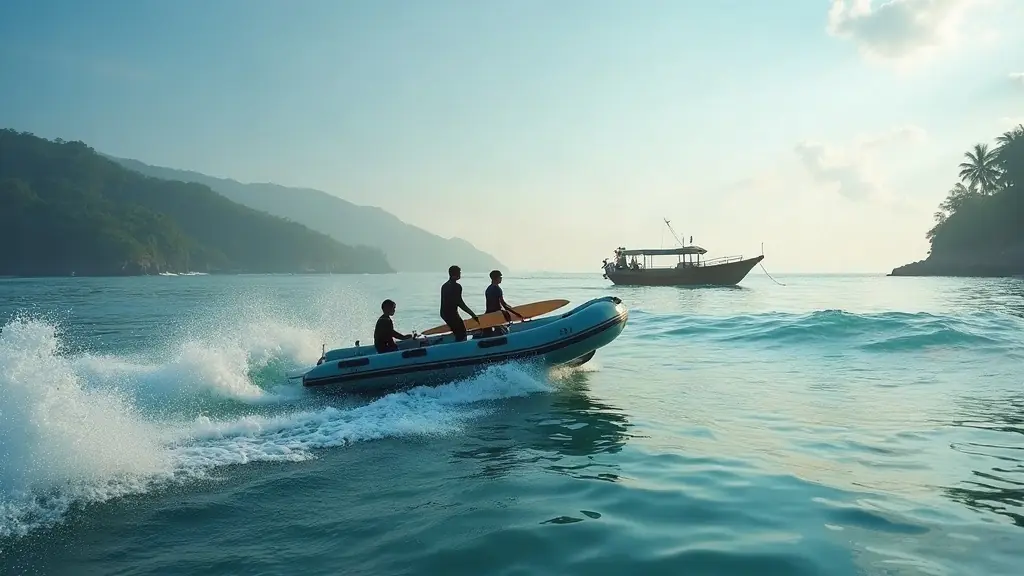
Most Mentawai surf charters work like this: you fly into Padang in West Sumatra and transfer to the boat. You cross overnight to the islands and spend about 10 to 12 nights living aboard, usually with 8 to 12 surfers. The skipper and surf guide move the boat to whichever breaks suit the swell, wind and tide that day.
So, how do Mentawai surf charters work in practice? If you have never done a boat trip before, the format can seem opaque. Who decides where you surf? How many sessions do you get a day? Where do you sleep while the boat moves? This guide walks through the process from your flight into Sumatra to the final crossing home, so you know what to expect before you book. We are an independent planning resource and don’t operate boats ourselves. We help travellers understand the options and connect with charter operators.
How do Mentawai surf charters work, step by step?
The basic idea is simple. The boat is a mobile surf base. Instead of staying in one place and travelling to the waves each day, you live on the vessel and it anchors near the best wave for the conditions. Here’s the typical sequence.
1. Fly to Padang
Almost every trip starts at Minangkabau International Airport (PDG) near Padang, West Sumatra. Most international travellers connect through Jakarta or Kuala Lumpur. Operators commonly include airport and harbour transfers on departure day, though you should confirm this in your quote. Many guests also book a night in Padang beforehand as a buffer against flight delays.
2. Board and cross overnight
Boats usually leave Padang’s harbour in the late afternoon or evening. The crossing to the surf zones generally takes around 8 to 12 hours to the northern breaks and 12 hours or more to the southern Pagai breaks, depending on the boat and sea conditions. You sleep through most of it and wake up near the first break. Some operators instead meet guests at Tua Pejat on Sipora, after the public fast ferry from Padang.
3. Surf, eat, rest, repeat
Once in the islands, days follow the conditions rather than a fixed timetable. A dinghy or tender ferries you from the boat to the line-up and back. Between sessions you eat, rest, check the forecast and move if needed.
4. Move between surf zones
Longer moves often happen overnight so no surf time is lost. Shorter hops between nearby breaks can happen during the day. Over a typical trip the boat may work several regions, from the Playgrounds area off Siberut down to Sipora and the Pagai islands.
5. Cross back and fly out
At the end of the trip the boat returns to Padang, usually overnight again. Because sea crossings depend on weather, it is wise not to book an international connection for the same morning you dock.
A typical day on a Mentawai surf boat
No two days are identical, but this is a common rhythm reported by operators.
| Time | What usually happens |
|---|---|
| Dawn | Coffee, quick check of the wave, first session for those who want it |
| Mid-morning | Return to the boat for a full breakfast and rest |
| Late morning – midday | Second session, or a short move to another break if wind or tide changes |
| Afternoon | Lunch, nap, fishing or snorkelling; afternoon session when conditions allow |
| Evening | Dinner, forecast briefing and plan for tomorrow; overnight move if the next zone is far away |
Two or three surf sessions a day is typical, but tides, swell, weather and your own energy decide the real number. Most surfers find that by day four or five, their bodies set the pace more than the schedule does.
Who decides where you surf?
The skipper and the surf guide make the call together. The guide reads the swell direction and size, the wind, the tide and how many other boats are around. The skipper is responsible for navigation, anchoring and vessel safety. Good crews also factor in the group’s ability. There’s little point anchoring at a heavy, shallow wave if half the guests are intermediates.
This flexibility is the core advantage of a boat. With dozens of quality reefs facing different directions, there is usually somewhere working. But a guide can’t guarantee any particular named wave, and famous breaks are shared with other boats and nearby camps.
Group size and booking formats
Many dedicated surf boats carry around 8 to 10 guests, and some larger vessels take up to about 12 or more. There are two main ways to book:
- Shared or per-berth: you buy a place on a scheduled trip and join other surfers. Good for solo travellers, couples and small groups.
- Private or exclusive: your group charters the whole boat, sets the dates and has more say in the itinerary.
To see how operators bundle these into trips, look at our Mentawai surf charter package overview. For timing, our guide to the Mentawai surf charter season explains which months suit which surfers.
What you pay for, and what you don’t
Charter prices usually bundle the cabin, all meals, non-alcoholic drinks, the tender, a surf guide and transfers in Padang. Flights, a pre-trip hotel, travel insurance, crew tips and often the Mentawai surf levy are usually extra. The levy is currently reported at IDR 2,000,000 per foreign surfer for 15 days. Published 2025–2026 rates for trips of around 10 to 11 days typically range from about US$1,900 to US$4,400 per person, depending on the boat and season. Prices vary by operator, so always compare written inclusions line by line.
Is a charter right for your level?
Many Mentawai waves break over shallow reef and suit confident surfers. Still, charters are not only for experts. In smaller swells and the shoulder season, a good guide can find softer, more forgiving waves. If you are building experience, read our page on a surf charter for intermediate surfers before you choose dates and a boat.
Quick facts
- Gateway airport: Minangkabau International (PDG), Padang.
- Usual crossing: overnight, around 8 to 12 hours to the northern breaks, 12 or more to Pagai, by charter boat.
- Typical group: 8 to 12 surfers per boat.
- Typical length: 10 to 12 nights, often 11 nights with around 10 surf days.
- Sessions per day: commonly two or three, conditions permitting.
- Decisions: skipper (safety, navigation) and surf guide (wave choice).
Frequently asked questions
Do you sleep on the boat the whole time?
Yes. On a liveaboard charter the boat is your accommodation from departure to return. Cabins range from simple bunks to private air-conditioned rooms, depending on the vessel.
How do you get from the boat to the wave?
A tender or dinghy takes you from the anchored boat to the channel beside the line-up and picks you up afterwards. At some breaks you can paddle straight from the boat.
Can I choose which breaks we surf?
You can tell the guide what you’d like, and on a private charter your group has more influence. The final choice still depends on swell, wind, tide, crowds and safety.
Is there internet on board?
Some boats offer satellite or mobile data, but coverage in the islands is patchy and often slow. Plan to be mostly offline and confirm with the operator if you need connectivity.
What happens if there is no swell?
Flat spells are uncommon in season but possible. Crews then look for the most exposed reefs, or offer fishing, snorkelling and island visits. Longer trips give you a better chance of catching a good pulse.
Get help planning your charter
If you’d like help comparing boats, dates and inclusions, send us your group size, surf level and preferred month. We’ll explain the options and introduce you to suitable operators. Reach us on WhatsApp or by email at bd@juaraholding.com, or browse our main Mentawai liveaboard guide.